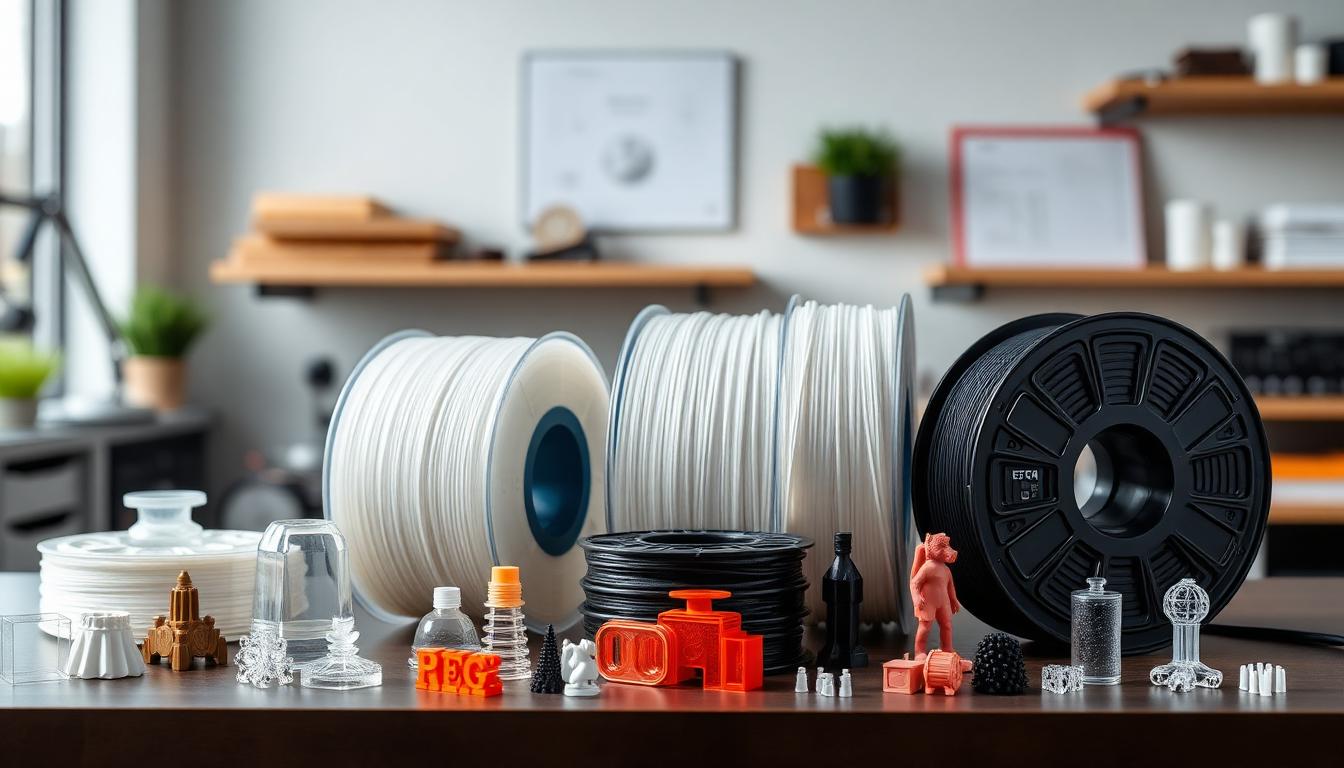
Introduction to PETG Filament
PETG (Polyethylene Terephthalate Glycol) has become the go-to material for 3D printing enthusiasts who need stronger, more durable prints than PLA can offer. Combining the ease of printing of PLA with the strength and temperature resistance approaching ABS, PETG is the perfect middle-ground filament.
In 2025, the best PETG filament options have improved significantly, with better formulations that reduce stringing, improve layer adhesion, and offer excellent optical clarity. Whether you're printing functional parts, outdoor items, or food-safe containers, there's a PETG that fits your needs.
TL;DR — Quick Summary
Polymaker PolyLite PETG wins for best overall PETG in 2025.
- 1Best Overall: Polymaker PolyLite PETG
- 2Best Value: Overture PETG
- 3Print Temp: 230-250°C nozzle, 70-80°C bed
- 4Key Benefit: UV stable, chemical resistant, no enclosure needed
What is PETG?
PETG is Polyethylene Terephthalate Glycol, a glycol-modified version of PET plastic that offers the strength and temperature resistance of ABS with the ease of printing of PLA.
PETG is food-safe, UV resistant, and ideal for outdoor applications. It prints at 230-250°C and requires a heated bed at 70-80°C.
Why Choose PETG?
- Higher strength than PLA
- Heat resistant up to 80°C
- Chemical resistant
- UV stable for outdoor use
- No enclosure required
- Food-safe options available
Explore Related Materials
Best ABS Filament 2025
Need higher heat resistance? ABS handles temperatures up to 100°C.
Tough PLA vs PETG Comparison
Compare PETG with Tough PLA to find the best material for your project.
Best Filament for Large Prints
Printing large parts? See which filaments resist warping best.
Top 5 Best PETG Filaments for 2025
After extensive testing, here are our top picks for the best PETG filament in 2025. Each has been evaluated for print quality, consistency, strength, and value.

Polymaker PolyLite PETG
Polymaker PolyLite PETG is the gold standard for PETG filaments. It offers exceptional print quality with minimal stringing and excellent layer adhesion. Perfect for functional parts and outdoor applications.
Pros
- Excellent layer adhesion
- Low warping
- Consistent diameter
- Wide color range
Cons
- •Slightly higher price
- •Requires dry storage
Specifications
Overture PETG
Overture PETG delivers premium quality at a budget-friendly price. Each spool includes a free build surface and offers consistent results with minimal calibration needed.
Pros
- Great value
- Build surface included
- Low warping
- Good clarity
Cons
- •Can string slightly
- •Limited colors
Specifications
Hatchbox PETG
Hatchbox PETG maintains the brand's reputation for reliability. It prints smoothly with excellent mechanical properties, making it ideal for durable functional parts.
Pros
- Trusted brand
- Consistent quality
- Good strength
- Easy to print
Cons
- •Premium pricing
- •Hygroscopic
Specifications
SUNLU PETG
SUNLU PETG offers excellent value for money with reliable performance. It's vacuum-sealed for freshness and prints with good clarity for transparent applications.
Pros
- Budget-friendly
- Vacuum sealed
- Good transparency
- Low odor
Cons
- •Occasional inconsistencies
- •Can be brittle
Specifications
eSUN PETG
eSUN PETG is known for high-quality raw materials and consistent extrusion. It produces strong, glossy prints with excellent optical clarity for transparent parts.
Pros
- High purity
- Excellent clarity
- Strong parts
- Wide availability
Cons
- •Stringing tendency
- •Needs dry box
Specifications
Optimal PETG Print Settings
Getting the best results from PETG requires dialing in your settings. Here are the recommended parameters for most PETG filaments:
Temperature Settings
- Nozzle Temperature: 230-250°C (start at 240°C)
- Bed Temperature: 70-80°C
- First Layer: +5°C on bed, +5°C on nozzle
- Cooling Fan: 50-70% after first layer
Speed & Retraction
- Print Speed: 40-60mm/s
- First Layer: 20-30mm/s
- Retraction (Bowden): 4-6mm at 30-40mm/s
- Retraction (Direct): 2-3mm at 25-35mm/s
Tips for Reducing Stringing
- Lower temperature: Try reducing nozzle temp by 5-10°C
- Increase retraction: Add 0.5-1mm to retraction distance
- Enable wipe: Turn on retraction wipe in your slicer
- Dry your filament: PETG absorbs moisture - use a filament dryer
- Increase travel speed: Faster travel reduces oozing time
PETG vs PLA: When to Use Each
| Property | PETG | PLA |
|---|---|---|
| Strength | Higher | Moderate |
| Heat Resistance | ~80°C | ~55°C |
| Ease of Printing | Moderate | Easy |
| Flexibility | Slight flex | Rigid, brittle |
| UV Resistance | Good | Poor |
| Outdoor Use | Excellent | Not recommended |
Choose PETG When:
- Printing functional parts that need strength
- Creating items for outdoor use
- Making parts that will experience heat (car interiors, electronics enclosures)
- Printing food containers (with food-safe PETG)
- Creating transparent or translucent parts
Choose PLA When:
- Printing decorative items and prototypes
- You're a beginner and want easy printing
- Creating detailed models with fine features
- Environmental concerns (PLA is biodegradable)
Frequently Asked Questions
What temperature should I print PETG at?
Most PETG filaments print best between 230-250°C for the nozzle and 70-80°C for the bed. Start at 240°C and adjust based on your results. Lower temperatures reduce stringing while higher temperatures improve layer adhesion.
Is PETG stronger than PLA?
Yes, PETG is generally stronger and more durable than PLA. It has better impact resistance, higher temperature tolerance (up to 80°C), and superior layer adhesion. PETG is the preferred choice for functional parts that need to withstand stress.
Why does my PETG print have strings?
PETG stringing is common due to its sticky nature. To reduce stringing: lower nozzle temperature by 5-10°C, increase retraction distance (4-6mm for Bowden, 2-3mm for direct drive), enable retraction wipe, and ensure your filament is dry.
Does PETG need an enclosure?
PETG doesn't require an enclosure for most prints since it has low warping tendency. However, an enclosure can help with very large prints and provides more consistent results. Unlike ABS, PETG doesn't release harmful fumes.
Can PETG be used outdoors?
Yes, PETG is excellent for outdoor applications. It has good UV resistance, doesn't degrade quickly in sunlight, and is water-resistant. It maintains structural integrity better than PLA in outdoor conditions.
Conclusion: Which PETG Should You Buy?
The best PETG filament in 2025 depends on your specific needs and budget:
- Best Overall: Polymaker PolyLite PETG - Exceptional quality and consistency
- Best Value: Overture PETG - Great quality at a budget price
- Most Reliable: Hatchbox PETG - Trusted brand with consistent results
- Budget Pick: SUNLU PETG - Affordable without sacrificing too much quality
Whichever you choose, remember to store your PETG properly (in a dry environment) and dial in your settings for best results. PETG is more forgiving than ABS but still requires some tuning compared to PLA.
Ready to Start Printing with PETG?
Get our top-rated Polymaker PolyLite PETG and experience the difference quality makes.
Shop Polymaker PETGRelated Articles
Tough PLA vs PETG: Which is Better for Your Project?
Complete comparison of Tough PLA and PETG properties, use cases, and printing requirements.
Best PLA Filament for High Speed Printing Review 2025
Find the best PLA filament for high-speed printing in 2025.
Best Carbon Fiber PLA Filament 2025
Expert reviews of top-rated CF-PLA brands for stiff, dimensionally stable 3D printed parts.