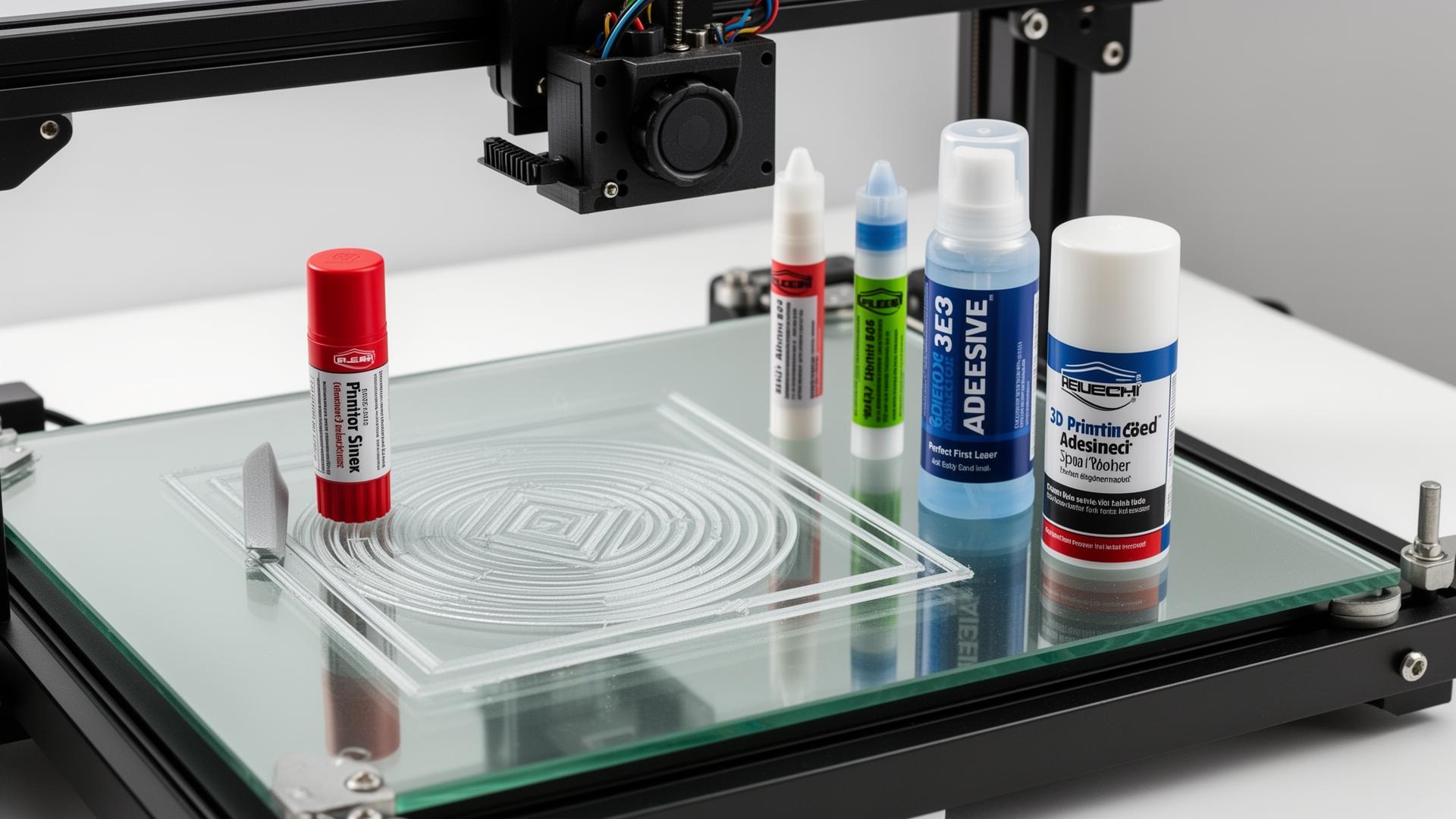
Quick Answer
For everyday printing, Magigoo Original is the sensible general-purpose choice: the manufacturer lists PLA, ABS, PETG, HIPS, ASA and TPU, with release once the plate cools. Print mostly on glass? Layerneer Bed Weld was designed around glass beds. Need fast coverage on a big plate? Use a spray such as 3DLAC. For polycarbonate use the dedicated Magigoo Pro PC, and for PEEK, ULTEM or PPSU use Vision Miner Nano Polymer Adhesive. And with a clean textured PEI plate and a dialled-in first layer, plenty of PLA prints need no adhesive at all.
Why Bed Adhesion Matters
First layer adhesion is the foundation of every successful 3D print. When the first layer does not hold, prints warp, curl and detach mid-job — wasting time and filament.
Adhesive is only one lever, though, and it is not always the right one. A clean plate, a correct bed temperature and a properly calibrated first layer solve most adhesion problems on their own. Adhesive helps where the material itself fights you — ABS, ASA, Nylon, polycarbonate — or where you want a release barrier rather than more grip, as with PETG on smooth PEI.
No adhesive eliminates warping on its own. What a good one does is widen the margin for error on materials and surfaces that are hard to hold.
TL;DR — Quick Summary
Pick a bed adhesive by material and build surface, not by ranking.
- 1General-purpose: Magigoo Original
- 2Glass beds: Layerneer Bed Weld
- 3Spray coverage: 3DLAC
- 4Simple alternative: Elmer's Purple Glue Stick
- 5High-temp engineering: Vision Miner Nano Polymer
- 6Polycarbonate: Magigoo Pro PC
What is Bed Adhesion?
Bed Adhesion The bond strength between a 3D printed first layer and the print bed surface. Proper bed adhesion prevents warping, curling, and print failures during the printing process.
Best Filament for Avoiding Warping
Adhesive is just part of the solution. Learn which filaments are naturally warp-resistant for large format printing.
Bed Adhesives by Use Case
These are use-case categories, not scored winners. We have not run laboratory testing on these adhesives, so every capability statement below is drawn from current manufacturer documentation and is labelled as such. Each category explains the criterion it is chosen against — breadth of materials, surface type, application method, simplicity or temperature range.
Magigoo Original
Why this category: One pen covers the materials most people actually print, and it is designed to release the part once the plate cools rather than bonding permanently.
Magigoo Original is a pen-applied adhesive aimed at everyday FDM printing. The manufacturer lists it as suitable for PLA, ABS, PETG, HIPS, ASA and TPU, with release after the build plate cools and cleanup using water or a damp cloth. Magigoo advertises 100+ applications per pen; that is a manufacturer figure, not something we measured.
Strengths
- Covers the common everyday materials
- Designed to release as the plate cools
- Water / damp-cloth cleanup per manufacturer
- Controlled pen application, little mess
Trade-offs
- Costs more than a generic glue stick
- Needs reapplication over time
- Not the polycarbonate formula (see Magigoo Pro PC)
At a glance
Layerneer Bed Weld
Why this category: Purpose-built for build-plate adhesion with easier release afterwards, and its original design target was glass beds.
Layerneer Bed Weld is a brush-on adhesive engineered specifically for build-plate adhesion and easier part release after printing. It was originally designed around glass-based printer beds; compatibility with newer textured and coated surfaces varies, so check the manufacturer's current surface guidance for your specific plate before use.
Strengths
- Engineered for build-plate adhesion, not repurposed
- Aims at easier release after printing
- Well suited to its original glass use case
Trade-offs
- Surface compatibility beyond glass varies — verify for your plate
- Brush application takes longer than a pen
At a glance
3DLAC Adhesive Spray (400ml)
Why this category: Fast, even coverage over a large plate, which is the practical advantage when you are fighting warping on wide ABS or ASA parts.
3DLAC is a spray adhesive designed for heated beds and anti-warping use. The manufacturer lists PLA, ABS, PETG, Nylon and TPU, and surfaces including glass, PEI and BuildTak, with water-based easy cleanup, a light spray application and letting the bed or part cool before removal. 3DLAC also publishes its own usage and coverage claims — treat those as manufacturer figures.
Strengths
- Quick, even coverage on large plates
- Manufacturer lists a broad material range
- Water-based cleanup guidance
Trade-offs
- Overspray — mask or remove the plate before spraying
- Needs decent ventilation
- Easy to apply too heavily
At a glance
Elmer's Purple Glue Stick
Why this category: A general-purpose office product, not a 3D printing product — but a thin swipe is a long-standing, low-complexity way to add grip or act as a release barrier.
This is a standard washable school glue stick, widely used in 3D printing as an improvised bed treatment. It is not engineered or marketed for 3D printing, so there are no manufacturer printing specifications behind it. Its practical appeal is availability, simplicity and the purple tint that shows where you have covered. Expect to reapply more often than with a purpose-made adhesive.
Strengths
- Available almost anywhere
- Purple tint shows coverage while applying
- Also useful as a release barrier for PETG on smooth PEI
Trade-offs
- Not engineered for 3D printing — no printing specs
- Frequent reapplication
- Uneven if applied in thick streaks
At a glance
Vision Miner Nano Polymer Adhesive
Why this category: It is the option in this list explicitly aimed at high-performance polymers that ordinary glue sticks cannot hold down.
Vision Miner Nano Polymer Adhesive is aimed at engineering and high-temperature printing. The manufacturer lists PEEK, PEI/ULTEM, PPSU, Nylon, ABS, ASA, PLA and PETG, and surfaces including borosilicate and ceramic glass, FR4/Garolite, PEI, BuildTak, flex plates and Kapton. The manufacturer states it activates with a heated build plate above 60°C, so it is not intended for unheated-bed use.
Strengths
- Manufacturer coverage extends to PEEK, ULTEM and PPSU
- Broad listed surface range including glass and Garolite
- Suited to enclosed, high-temperature machines
Trade-offs
- Requires a heated plate above 60°C (manufacturer)
- More product than a PLA-only workflow needs
At a glance
Magigoo Pro PC
Why this category: Polycarbonate pulls hard as it cools, and this is the dedicated PC formula — it is a different product from Magigoo Original.
Magigoo Pro PC is a separate specialty product in the Magigoo range, formulated for polycarbonate and PC-based blends. If you are printing PC, this is the formula to look at rather than assuming Magigoo Original covers it — Original is the general-purpose everyday pen, Pro PC is the polycarbonate-specific one.
Strengths
- Dedicated polycarbonate formulation
- Same familiar pen-style application
- Clear alternative to over-stretching the general-purpose pen
Trade-offs
- Single-purpose — unnecessary for PLA or PETG
- PC printing still needs an enclosure and a hot plate
At a glance
We have no affiliate relationship with any of these adhesive brands, so there are no purchase buttons on this page. Buy from the manufacturer or a retailer you already trust, and check the current listing for volume and surface guidance before ordering.
Buying Decision Table
| Product | Best For | Common Materials | Surface Considerations | Application | Cleanup / Release |
|---|---|---|---|---|---|
| Magigoo Original | General-purpose | PLA, ABS, PETG, HIPS, ASA, TPU | Glass, PEI, BuildTak, powder-coated plates, Kapton | Pen | Water / damp cloth; release once cool |
| Layerneer Bed Weld | Glass beds | Common FDM materials | Glass is the core use case; verify other surfaces | Brush-on | Designed for easier release after printing |
| 3DLAC Spray | Fast coverage, warp-prone parts | PLA, ABS, PETG, Nylon, TPU | Glass, PEI, BuildTak | Light spray, heated bed | Water-based; cool before removal |
| Elmer's Purple Glue Stick | Simple, low-complexity option | Commonly used with PLA, PETG | Glass and smooth surfaces | Thin swipes | Warm water and a cloth |
| Vision Miner Nano Polymer | High-temp engineering materials | PEEK, PEI/ULTEM, PPSU, Nylon, ABS, ASA, PLA, PETG | Borosilicate/ceramic glass, FR4/Garolite, PEI, BuildTak, flex plates, Kapton | Brush-on, plate above 60°C | Per manufacturer guidance |
| Magigoo Pro PC | Polycarbonate and PC blends | PC, PC blends | Check manufacturer surface guidance | Pen | Per manufacturer guidance |
Material and surface columns reflect current manufacturer documentation. Formulations and pack sizes change — confirm on the manufacturer's page for your specific plate and filament.
Best 3D Printer Enclosure 2025
An enclosure can dramatically improve bed adhesion for ABS and ASA by eliminating drafts and maintaining temperature.
How to Apply Bed Adhesive Correctly
Application technique matters as much as the product. A thick, uneven layer causes as many first-layer problems as no adhesive at all.
Application Best Practices
Before Applying
- • Clean the bed with IPA (isopropyl alcohol)
- • Let the bed dry completely
- • Check whether your product is applied hot or cold
- • Level the bed and set the first layer correctly first
During Application
- • Apply a thin, even layer only
- • Cover just the print area
- • Let it become tacky before printing
- • Spray outdoors or with good ventilation, plate removed if possible
Let the bed and part cool before removal. Most of these products rely on the cooldown for clean release, and levering a hot part off a coated plate is how sheets get damaged. When cleaning residue, use warm water, soapy water or IPA depending on the product — avoid acetone on PEI sheets, it can attack the surface.
Adhesive Guidance by Filament Material
Start with the material, then the surface. Several rows below are "usually nothing needed" — that is the correct answer more often than product guides admit.
| Material | Typical Need | Notes |
|---|---|---|
| PLA | Often none on clean textured PEI | Fix the first layer and clean the plate before reaching for adhesive; a general-purpose pen or glue stick helps on glass. |
| PETG | Barrier layer more than extra grip | On smooth PEI, PETG can bond hard enough to damage the sheet — glue stick or a general-purpose pen acts as a sacrificial layer. |
| ABS | Adhesive plus a stable enclosure | A spray such as 3DLAC covers large plates quickly; drafts and a cold room undo any adhesive. |
| ASA | Adhesive plus enclosure | Behaves much like ABS; both a general-purpose pen and 3DLAC list ASA support. |
| TPU | Usually a clean plate is enough | TPU tends to stick well; a thin layer can make release easier rather than adhesion stronger. |
| Nylon | Dedicated adhesive recommended | Nylon is listed by both 3DLAC and Vision Miner; dry filament matters as much as the adhesive here. |
| PC / PC blends | Specialty adhesive | Magigoo Pro PC is the polycarbonate-specific formula — not Magigoo Original. Vision Miner also covers PC-class engineering work. |
| PEEK, ULTEM, PPSU | High-temperature adhesive | Vision Miner lists these materials and states activation on a plate above 60°C; these need a high-temp machine regardless. |
Frequently Asked Questions
Do I need bed adhesive at all?
Often not. A clean, well-prepared textured PEI plate with a correctly calibrated first layer handles most PLA and much PETG printing without any adhesive. Adhesive earns its place with warp-prone materials such as ABS, ASA, Nylon and PC, on glass beds, and as a release barrier where a material bonds too strongly to the surface.
Which bed adhesive should I start with?
For a general-purpose pen that covers the everyday materials, Magigoo Original is the straightforward pick. If you print mainly on glass, Layerneer Bed Weld was designed around glass beds. If you need fast coverage on a large plate, a spray such as 3DLAC suits that better. For polycarbonate look at Magigoo Pro PC, and for PEEK, ULTEM or PPSU look at Vision Miner Nano Polymer Adhesive.
How do I remove adhesive residue from my bed?
For glue stick and Magigoo, warm water and a soft cloth work well; Magigoo's own guidance is water or a damp cloth. For spray adhesives, isopropyl alcohol is the usual choice, and 3DLAC describes its formula as water-based for easy cleanup. For stubborn residue use a plastic scraper with warm soapy water. Avoid acetone on PEI sheets — it can damage the surface.
Can I use hairspray as bed adhesive?
Unscented hairspray is a long-standing improvised option, but it creates overspray, leaves residue and varies between formulations because it was never designed for the job. A purpose-made printing spray such as 3DLAC gives you a documented material and surface list instead of guesswork.
Why do prints still warp even with adhesive?
Adhesive cannot fix a mechanical problem. Warping that persists usually points to bed temperature being wrong for the material, a first layer set too high or too low, drafts or a cold room pulling heat from the part, sharp unfilleted corners, or a bed that was oily before the adhesive went on. Level and clean the plate and correct the first layer before adding more adhesive.
Does adhesive only make prints stick harder?
No. On some material and surface combinations it does the opposite job: PETG on smooth PEI can bond so strongly that it tears the sheet, and a thin glue layer acts as a sacrificial barrier so the part releases cleanly. Magigoo Original is likewise designed around releasing the part once the plate cools rather than holding it permanently.
Best Filament Dryer 2025
Wet filament causes adhesion problems too. Keep your filament dry with our top-rated filament dryers.
Conclusion: Which Bed Adhesive Should You Choose?
If you want one product that covers everyday printing, Magigoo Original is the general-purpose answer: a broad manufacturer material list, straightforward pen application and release once the plate cools. Printing mainly on glass pushes you toward Layerneer Bed Weld, and big warp-prone ABS or ASA parts are quicker to treat with a spray such as 3DLAC.
Move to a specialty product only when the material demands it — Magigoo Pro PC for polycarbonate, Vision Miner Nano Polymer Adhesive for PEEK, ULTEM, PPSU and similar engineering materials. And before buying anything, check the basics: a clean plate, the right bed temperature and a properly set first layer solve more adhesion problems than any bottle on this page.
Last Updated: September 16, 2026


