Best Filament Dryer 2025 - Top 5 Picks for Dry, Perfect 3D Prints
Stop ruined prints from wet filament. Our expert-tested guide reveals the best filament dryers that actually work, from budget picks to premium options. All of our top picks are available in the US with fast domestic shipping and competitive pricing.
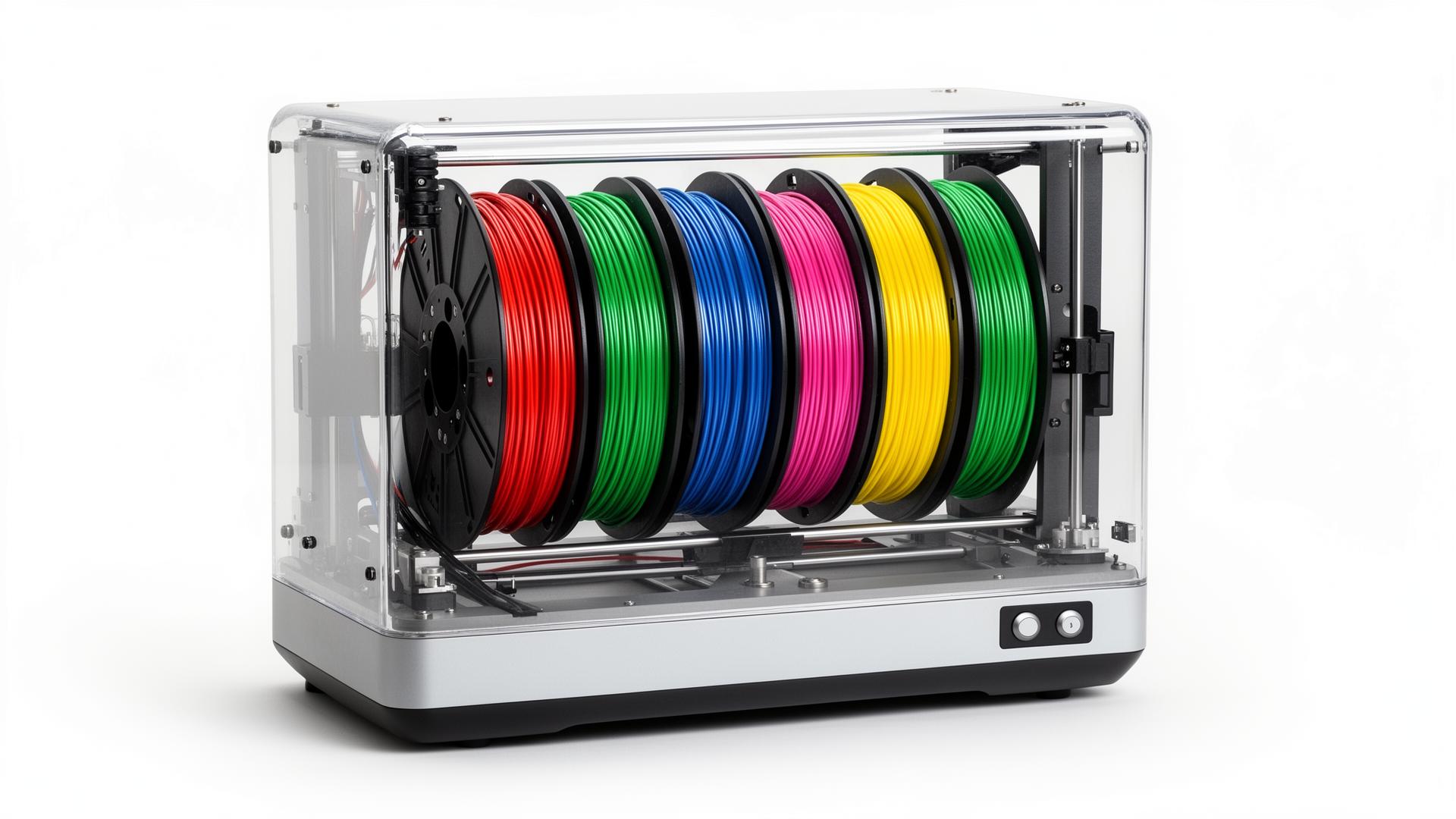
Quick Answer
The best filament dryer in 2025 is the Polymaker PolyDryer. It offers precise temperature control up to 70°C, fits standard 1kg spools, and maintains humidity under 15%. For budget buyers, the SUNLU FilaDryer S2 delivers excellent value with real-time humidity monitoring.
TL;DR — Quick Summary
Your filament dryer cheat sheet for 2025
- 1Best Overall: Polymaker PolyDryer - Precise 70°C heating, excellent reliability
- 2Best Budget: SUNLU FilaDryer S2 - real-time humidity display
- 3Best Dual-Spool: Creality Space Pi Plus - Holds 2 spools, preset modes
- 4Key Insight: Wet filament causes 80% of print quality issues with PETG, TPU, and Nylon
- 5Pro Tip: Print directly from your dryer to keep hygroscopic materials dry during long prints
What is Hygroscopic?
Hygroscopic is a material that readily absorbs moisture from the air. In 3D printing, hygroscopic filaments like Nylon, TPU, PETG, and ABS absorb atmospheric humidity, leading to print defects like bubbling, stringing, and weak layer adhesion.
Most 3D printing filaments are hygroscopic to some degree. Nylon is the most moisture-sensitive, absorbing up to 10% of its weight in water, while PLA is the least hygroscopic but still benefits from drying in humid environments.
What is a Filament Dryer?
A filament dryer is a specialized device that removes moisture from 3D printing filament using controlled heat and airflow. Unlike food dehydrators or ovens, filament dryers are designed specifically for plastic spools with:
- Precise temperature control - Prevents melting or warping of the spool
- Even heat distribution - Ensures the entire spool dries uniformly
- Humidity monitoring - Shows when filament is ready to use
- Print-through capability - Feed filament directly to your printer while drying
Most filament dryers maintain temperatures between 40-70°C (104-158°F) and can reduce filament moisture content from 0.4% to under 0.1% within 4-12 hours depending on the material.
Complete Filament Guide
Learn about all filament types including moisture-sensitive materials like PETG, TPU, and Nylon.
Why Do You Need a Filament Dryer?
Signs Your Filament is Wet
- Popping or crackling sounds during extrusion
- Excessive stringing between parts
- Visible bubbles in the extruded filament
- Rough, pockmarked surface finish
- Poor layer adhesion and weak parts
- Inconsistent extrusion width
Moisture in filament is the #1 cause of print quality issues. When wet filament is heated in the hotend, the water vaporizes instantly, creating steam bubbles that:
- Disrupt smooth extrusion flow
- Create micro-voids that weaken the printed part
- Cause stringing and oozing
- Degrade the plastic polymer chains over time
Moisture Sensitivity by Filament Type
High Sensitivity (MUST dry):
- Nylon/PA - Absorbs 10%+ moisture
- TPU/TPE - Extremely hygroscopic
- PC (Polycarbonate)
- PVA (support material)
Medium Sensitivity:
- PETG - Very common issue
- ABS/ASA
- HIPS
Even PLA benefits from drying in humid climates (above 50% RH).
Top 5 Best Filament Dryers for 2025
We compared filament dryers by temperature range, capacity, controls, material compatibility, and price to identify useful options at each budget. Here are our editorial picks:
Polymaker PolyDryer

Key Features:
- Precise digital temperature control
- 360° even heating
- Low humidity indicator
- Compatible with 1kg spools
Pros:
- Excellent temperature accuracy
- Quiet operation
- Compact design
- Great brand reputation
- Ships from US warehouse
Cons:
- Single spool only
- No active dehumidification
SUNLU FilaDryer S2
Key Features:
- Touch screen display
- 0-24 hour timer
- Real-time humidity display
- Fits up to 1kg spools
Pros:
- Excellent value for money
- Easy to use
- Real-time humidity monitoring
- Affordable price
Cons:
- Lower max temperature
- Slower drying for nylon
Creality Space Pi Plus
Key Features:
- Dual spool capacity
- Hot air circulation
- Large LCD screen
- Multiple preset modes
Pros:
- Holds 2 spools at once
- Good temperature range
- Preset drying modes
- Reasonable price
Cons:
- Bulkier design
- Fan can be audible
EIBOS Cyclopes
Key Features:
- Active heating system
- 360° uniform drying
- Humidity sensor
- 12-hour timer
Pros:
- Fast drying times
- Effective on hygroscopic materials
- Good temperature control
- Durable build
Cons:
- Single spool only
- Slightly louder than passive dryers
Sovol SH01
Key Features:
- Dual spool storage
- LED display
- Adjustable temperature
- Compact footprint
Pros:
- Holds 2 spools
- Very affordable
- Good for PLA/PETG
- Space efficient
Cons:
- Lower max temp
- Not ideal for nylon/PC
Best PETG Filament 2025
PETG is highly moisture-sensitive. See our top picks for the best PETG brands that print reliably.
How to Choose the Best Filament Dryer
Temperature Range
Higher max temps (70°C+) are essential for Nylon and PC. Most PETG and TPU users are fine with 55-65°C. Check your filament's recommended drying temperature before buying.
Spool Capacity
Single-spool dryers are compact and efficient. Dual-spool models save time if you frequently switch colors. Consider your workflow and storage space.
Humidity Monitoring
Real-time humidity displays help you know exactly when filament is ready. Look for dryers that show both temperature and humidity readings.
Print-Through Feature
The ability to print directly from the dryer keeps hygroscopic materials dry during long prints. Essential for Nylon, TPU, and multi-day prints.
Which Filaments Need Drying Most?
| Filament | Drying Temp | Drying Time | Priority |
|---|---|---|---|
| Nylon/PA | 70°C | 12-24 hours | Critical |
| TPU/TPE | 50°C | 4-8 hours | Critical |
| Polycarbonate | 70°C | 8-12 hours | Critical |
| PETG | 65°C | 4-6 hours | High |
| ABS/ASA | 60°C | 4-6 hours | High |
| PLA | 45-50°C | 4-6 hours | Low-Medium |
Best TPU Filament 2025
TPU is extremely moisture-sensitive. Learn which TPU brands offer the best quality and print reliability.
Frequently Asked Questions
How long should I dry my filament?
Drying times vary by material: PLA needs 4-6 hours at 45-50°C, PETG needs 4-6 hours at 65°C, TPU needs 4-6 hours at 50°C, Nylon needs 12+ hours at 70°C, and ABS needs 4-6 hours at 60°C. Always check manufacturer recommendations for specific brands.
Can I print directly from a filament dryer?
Yes! Most filament dryers have a filament outlet that allows you to print directly from the dryer. This is especially useful for hygroscopic materials like nylon and TPU that absorb moisture quickly. The Polymaker PolyDryer and SUNLU FilaDryer S2 both support this feature.
Do I really need a filament dryer?
If you print with hygroscopic materials like PETG, TPU, nylon, or ABS, a filament dryer is essential. Wet filament causes stringing, bubbling, poor layer adhesion, and weak prints. Even PLA benefits from drying in humid climates. A $50 dryer can save hundreds in ruined prints.
Can I use my oven instead of a filament dryer?
While technically possible, ovens are risky for filament drying. Most home ovens have poor temperature accuracy and hot spots, risking melted or warped spools. Filament dryers offer precise, even heating designed specifically for this purpose and are much safer.
How do I know if my filament is wet?
Signs of wet filament include: popping/crackling sounds during printing, excessive stringing, bubbles in the extruded filament, rough surface finish, poor layer adhesion, and brittle prints. If you see any of these symptoms, dry your filament immediately.
Final Verdict: Which Filament Dryer Should You Buy?
For most 3D printing enthusiasts, the Polymaker PolyDryer offers the best combination of performance, reliability, and brand support. Its precise 70°C temperature control handles everything from PLA to Nylon. Polymaker ships directly from their US warehouse, so most orders within the United States arrive in just a few business days.
Budget-conscious makers should grab the SUNLU FilaDryer S2 - it's half the price and handles PETG and TPU perfectly with its real-time humidity monitoring.
If you print with multiple colors frequently, the Creality Space Pi Plus dual-spool design saves time and desk space.
Affiliate Disclosure: 3D Print Geek is a participant in affiliate programs with Polymaker and Sovol3D. We may earn commissions on qualifying purchases at no extra cost to you. Full disclosure.
Related Articles
Best Filament for Functional Parts (What Actually Holds Up)
The best filament for functional 3D parts — real picks for strength, heat, and impact. US pricing, honest experience-based recommendations.
Best Filament for Large 3D Prints (No More Warping & Failed Prints)
The best filament for large 3D prints — what actually fixed my warping and failed prints. Real US picks, USD pricing, honest experience-based review.
Best ABS Filament (Top Picks for Strength & Durability in 2026)
The best ABS filament for 2026 — real picks, US pricing, and what actually works for strong, heat-resistant 3D prints.