Functional Parts Guide · Published November 15, 2024 · Updated September 30, 2026 · 14 min read
Tough PLA vs PETG for Functional Parts: Which Should You Use?
By Chris Avery, Publisher / Editor
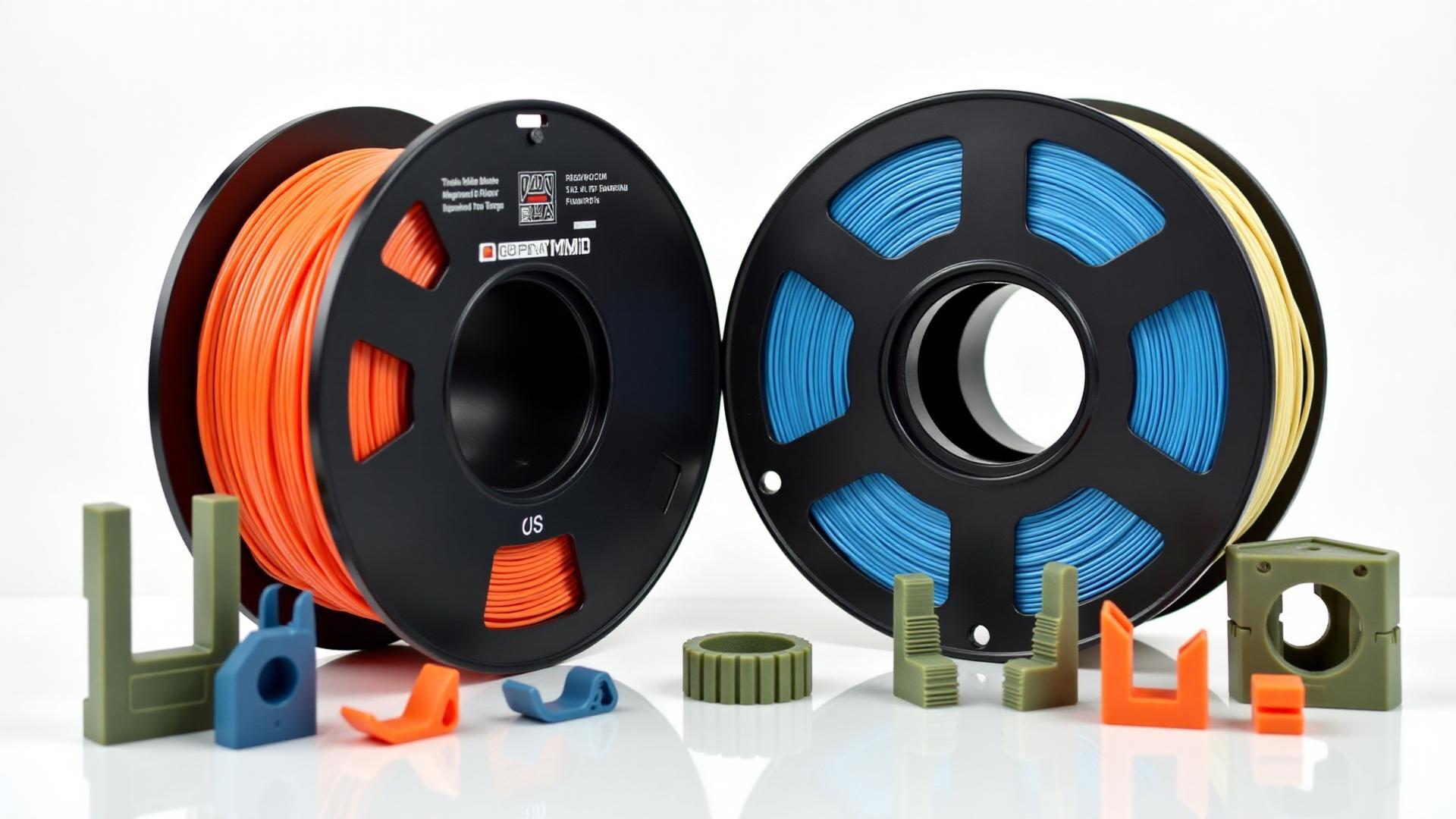
This page is specifically about functional parts. If you're choosing between standard PLA and PETG in general, start with our broader PLA vs PETG comparison.
Quick Decision
Neither material is better for every functional part. The part's job decides. As a starting point:
Lean Tough PLA when the part…
- must stay stiff and not deflect
- needs tight dimensional accuracy
- lives indoors at room temperature
- needs clean surfaces, bridges or sanding
- should print easily with minimal tuning
Lean PETG when the part…
- gets knocked, dropped or flexed
- carries a sustained load over time
- sees warmth above room temperature
- lives in damp areas or moderate outdoor exposure
- needs to bend before it breaks
Affiliate links to the Polymaker store — we may earn a commission at no extra cost to you.
What "Tough PLA" Actually Means
"Tough PLA", "PLA+" and "impact-modified PLA" are marketing names, not one standardized material. Manufacturers blend PLA with impact modifiers or other additives to reduce brittleness, and each formulation is different. Two spools both labeled "Tough PLA" can differ meaningfully in impact behavior, stiffness and heat tolerance.
That matters for this comparison: you are really comparing a specific Tough PLA to a specific PETG. Use the manufacturer's technical data sheet for the exact products you're considering. One widely available example is Polymaker PolyMax Tough PLA (affiliate link), which Polymaker markets as a higher-impact alternative to standard PLA. For the broader PLA+ category, see our PLA+ filament guide.
Functional-Part Decision Table
Qualitative, general tendencies. Where behavior depends strongly on formulation, settings or geometry, the table says so. No universal numbers are given because they don't exist across brands.
| Property | Tough PLA | PETG | What it means for your part |
|---|---|---|---|
| Impact / toughness | Improved over standard PLA; varies by formulation | Generally good; tends to deform before breaking | Depends heavily on formulation and orientation |
| Stiffness | Higher — flexes less under load | Lower — flexes more | Tough PLA if the part must not deflect |
| Creep under sustained load | More prone, especially when warm | Generally more resistant in warm conditions | PETG for long-term loaded parts |
| Heat exposure | Softens at relatively low temperatures | Tolerates moderately more heat | Neither for hot environments — see below |
| Dimensional accuracy | Very good; low shrink | Good; slightly more tuning | Tough PLA for tight-fit parts |
| Print difficulty | Easy | Moderate | Tough PLA |
| Warping | Very low | Low | Both fine on open printers |
| Stringing | Low | Higher | Tough PLA for clean parts |
| Bridging / fine detail | Clean | Softer bridges, more tuning | Tough PLA |
| Moisture sensitivity | Moderate | Moderate to higher | Dry storage helps both |
| Outdoor exposure | Poor for long-term sun and heat | Better, but not a UV specialist | ASA for sustained sun |
| Surface finish | Matte to satin, crisp | Glossy, can show strings | Depends on the look you want |
| Post-processing | Sands reasonably; can be brittle-dusty | Gummy when sanded; better left as printed | Tough PLA if you plan to sand/paint |
Strength, Stiffness, Toughness and Impact: Not the Same Thing
These words get used interchangeably, which is where many material choices go wrong.
- Strength
- How much stress a material can take before it yields or breaks. A data-sheet tensile figure describes one loading direction under lab conditions.
- Stiffness
- How much a part resists bending under load. A stiff part stays straight; a less stiff part flexes, even if it doesn't break.
- Toughness
- How much energy a material absorbs before it fractures. Tough materials tend to deform, stretch or bend before failing.
- Impact resistance
- Toughness under a sudden load — a drop, a hammer tap, a door slamming into a bracket.
A stiff material can feel "stronger" in the hand because it doesn't flex, yet crack suddenly when dropped. A tougher material can feel "weaker" because it bends, yet survive the same drop. PLA-based materials generally fail in a more brittle, sudden way; impact modifiers reduce that tendency. PETG generally yields and deforms first, which often gives visible warning before failure. Neither behavior is universally better — a jig that must not flex wants stiffness, a clip that snaps on and off wants toughness.
Heat and Creep: Why Short-Term Strength Isn't the Whole Story
Creep is slow, permanent deformation under a constant load. A shelf bracket that holds fine on day one can sag over weeks. Creep speeds up as temperature rises toward a material's softening range.
PLA-based materials, including most Tough PLA formulations, soften at relatively low temperatures — a sunny windowsill, a hot car or a warm electronics enclosure can be enough to cause deformation under load. PETG's softening range is generally higher, which gives it more margin, but it still creeps and can still deform in a hot vehicle.
If heat matters, check the heat deflection or Vicat softening figure on the specific product's data sheet, and compare them measured under the same test method. For genuinely hot environments, consider ASA or ABS instead.
Scenario Matrix: Real Functional Parts
| Part | What matters | How to decide |
|---|---|---|
| Wall brackets and shelf supports | Stiffness, sustained load, creep | Indoors at room temperature, Tough PLA's stiffness is useful; for long-term load or warm rooms, PETG's creep margin matters more. Avoid either for anything whose failure could injure someone. |
| Tool holders and pegboard parts | Knocks, repeated insertion, stiffness | PETG handles repeated bumps well; Tough PLA keeps tighter tolerances. Choose by whether impact or fit matters more. |
| Shop jigs and fixtures | Dimensional accuracy, stiffness, wear | Tough PLA often wins on accuracy and ease; use PETG if the jig sits near heat or gets dropped often. |
| Electronics housings | Warmth from components, fit, appearance | PETG if the enclosed electronics run warm; Tough PLA for cool-running projects that need crisp fit. Neither is a substitute for rated enclosures where electrical safety codes apply. |
| Snap-fit clips | Repeated flexing without cracking | PETG's willingness to flex usually suits clips; stiff PLA-based clips are more likely to crack at the hinge point. |
| Mounts in cars or near windows | Heat, sun, sustained load | Tough PLA is a poor fit. PETG is better but can still soften in a hot car; ASA or higher-temperature materials are safer. |
| Storage containers | Toughness, damp areas | PETG for garages, sheds or bathrooms. Do not assume either is suitable for food contact. |
| Replacement household parts | Varies: knobs, covers, caps | Match the part's job: stiff indoor parts suit Tough PLA; parts that get knocked, flexed or warmed suit PETG. |
| Light-duty mechanical parts | Wear, friction, sustained load | Both are acceptable for light prototypes. For real gears or sliding parts, nylon is usually more appropriate. |
Limits: neither Tough PLA nor PETG should be relied on for safety-critical, life-safety, load-rated or regulated applications (climbing, vehicle, medical, food-contact, electrical code) without appropriate engineering evidence.
When to Choose Neither
- The part must flex, grip or cushion: TPU is built for that. See TPU filament.
- Sustained sun and outdoor heat: ASA is generally designed for UV exposure. See ASA filament.
- Gears, bushings and wear surfaces: nylon's wear behavior is often a better match, though it's harder to print and very moisture-sensitive. See nylon filament.
- Very stiff, lightweight parts: fiber-filled materials may suit, with a hardened nozzle.
Still not sure? The Filament Selector asks about heat, outdoor exposure, flexibility and your printer, then suggests materials worth considering.
Printability Compared
Always start with the temperatures on your spool or the manufacturer's data sheet — formulations differ.
Tough PLA
- Nozzle temperatures usually in PLA territory; follow the spool.
- Mild bed heat; releases easily from PEI once cool.
- Full part cooling generally helps bridges and overhangs.
- Low stringing, clean bridging, very little warping.
- Enclosure not needed; a hot enclosure can cause heat creep.
- Still benefits from dry storage.
PETG
- Higher nozzle temperatures than PLA; follow the spool.
- Warmer bed; can bond too strongly to smooth PEI or glass.
- Moderate cooling; too much can weaken layer bonding.
- Prone to stringing; tune retraction and keep it dry.
- Avoid heavy first-layer squish.
- Enclosure rarely required.
Troubleshooting help: stringing fixes, warping on large prints, first-layer problems. For moisture, see filament dryers and storage containers.
Part Design Matters as Much as Material
A well-designed part in either material often outperforms a poorly designed part in the "better" one.
- Print orientation and layer direction: FDM parts are weakest between layers. Orient so the main load runs along the layers, not across them.
- Walls/perimeters: extra perimeters usually add more useful strength than extra infill.
- Infill strategy: pattern and density affect stiffness and weight; more is not always better.
- Stress concentrations: sharp inside corners start cracks — add fillets.
- Fastener areas: thicken bosses around screws, consider heat-set inserts, and avoid over-tightening.
- Layer adhesion: temperature, cooling and speed all affect it; PETG in particular needs enough heat to bond well.
No load ratings are given here because real capacity depends on geometry, settings and the specific filament. For more material-by-application guidance, see best filament for functional parts.
Specific Materials to Consider
We have not published independent lab testing of these products. Descriptions are based on manufacturer information; verify current specifications and pricing on the product page.
Polymaker PolyMax Tough PLA
- Who it may suit:
- indoor functional parts that need PLA-like printability with less brittleness.
- Why it's relevant:
- a well-known impact-modified PLA from a filament specialist that publishes technical data sheets.
- Verify:
- the impact and heat figures on the current data sheet against your part's needs.
- Limitations:
- still PLA-based, so heat and long-term creep limits apply.
Polymaker PolyLite PETG
- Who it may suit:
- general functional parts that see knocks, damp conditions or moderate warmth.
- Why it's relevant:
- a mainstream standard PETG from the same manufacturer, making side-by-side data-sheet comparison straightforward.
- Verify:
- the recommended nozzle/bed temperatures and drying guidance for the current version.
- Limitations:
- typical PETG stringing and bed over-adhesion still need tuning.
Affiliate links open the Polymaker store. We may earn a commission at no extra cost to you.
For a wider look at PETG brands, see our PETG buyer's guide.
Frequently Asked Questions
Is Tough PLA stronger than PETG?
It depends on which property you mean. Tough PLA is usually stiffer than PETG and can match or exceed it on some published strength figures, while PETG tends to bend and absorb impacts before breaking. Tough PLA formulations vary by brand, so compare the specific manufacturer data sheets rather than assuming one is stronger in every way.
Is PETG better for functional parts?
Not automatically. PETG is often the better fit when a part sees warmth, damp conditions, sustained load or repeated flexing. Tough PLA is often the better fit when a part needs to stay stiff and dimensionally accurate indoors and you want easier, cleaner printing. The demands of the specific part should decide.
Which handles impact better?
Both are marketed as tougher than standard PLA. PETG generally deforms before it fails, which helps with knocks and drops. Impact-modified PLA narrows the gap considerably compared with standard PLA, but results depend on the formulation, print orientation and part geometry.
Which is easier to print?
Tough PLA is usually easier. It prints at PLA-like temperatures, strings less, bridges more cleanly and releases more easily from common build surfaces. PETG typically needs more tuning for stringing, cooling and first-layer height.
Does PETG creep under load?
All thermoplastics creep to some degree under sustained load, and creep increases with temperature. PLA-based materials are commonly reported to creep more noticeably as they approach their softening range, which is relatively low. PETG's higher softening range generally gives it more margin in warm conditions, but it is not immune.
Is Tough PLA the same as PLA+?
Not necessarily. "Tough PLA", "PLA+" and "impact-modified PLA" are marketing names, not a single standardized material. Some products labeled PLA+ are tougher than standard PLA; others differ mainly in color or surface. Check the manufacturer's technical data sheet for impact and heat figures.
Verdict
For stiff, accurate, indoor parts that should print easily, Tough PLA is often the practical choice. For parts that get knocked, carry load over time, or see warmth and damp, PETG usually offers more margin. For flexing, sustained sun, high heat or wear surfaces, look beyond both. Whichever you choose, orientation, perimeters and fillets will matter as much as the filament.
Two ways to buy
The specific Tough PLA and PETG named above are Polymaker products, sold at the Polymaker store. Sovol sells its own PETG filament if you'd prefer an alternative.
Both links are affiliate links. We may earn a commission on a qualifying purchase, at no additional cost to you.