Best Glue for PLA and 3D Prints (2026): Super Glue vs Epoxy
By Chris Avery, Publisher / Editor
Sooner or later every print is too big for the bed, snaps at a thin point, or needs a part attached that could not be printed in place. The best glue for PLA depends on the job: a super glue gel handles most small joints in seconds, a two-part epoxy is the answer for strength, loose fits and big parts, and a few materials need something more specialized. This guide explains which glue to use when, compares seven specific products, and covers PETG, ABS, TPU, nylon and polypropylene too.
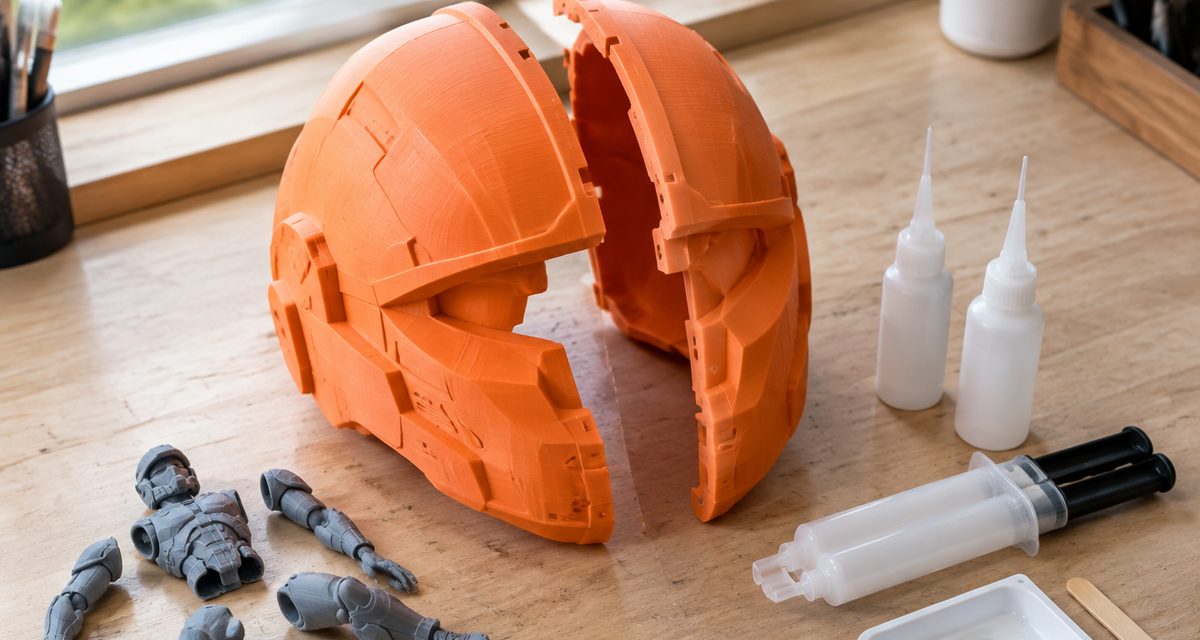
Quick Answer
The best glue for PLA is a rubber-toughened super glue gel such as Loctite Super Glue Ultra Gel Control for most joints. Use a two-part epoxy (Loctite Epoxy Plastic Bonder, or a 30-minute epoxy for large parts) when the joint carries load or the parts do not fit tightly. Acetone does not work on PLA.
Amazon buttons open Amazon.com search results for that exact product name in a new tab, not a single product page. Results can include multipacks, sizes and similar items, so match the brand and product before you buy. Amazon affiliate links. As an Amazon Associate I earn from qualifying purchases.
TL;DR — Quick Summary
Best Glue for PLA — 2026 Picks
- 1🏆 Best overall: Loctite Super Glue Ultra Gel Control — rubber-toughened, no-drip gel
- 2⚡ Best super glue system: BSI Maxi-Cure + Insta-Set — thick CA plus spray accelerator
- 3🧪 Best two-part epoxy: Loctite Epoxy Plastic Bonder — fills gaps, 24-hour full cure
- 4🪖 Best for large parts: BSI Slow-Cure 30 Minute Epoxy — time to align long seams
- 5🔍 Best for small details: Gorilla Super Glue Micro Precise — drop-by-drop control
- 6💲 Best budget: Loctite Professional Liquid 20 g — more glue per bottle
What is Cyanoacrylate (CA) Glue?
Cyanoacrylate (CA) Glue The chemical name for super glue. Cyanoacrylate cures in seconds when it meets the trace moisture on a surface, making a hard, thin bond. Thin liquids flow into tight joints, while gels stay put on vertical seams.
🛏️ Looking for glue for the print bed instead?
This guide is about gluing printed parts together. For glue sticks and sprays that help prints stick to the build plate, see our bed adhesive guide.
Glues for 3D Prints Compared
Timings and limits below come from each maker's data sheet or product page, checked on November 19, 2026. Set and cure times depend on temperature, humidity and how much glue you use. We do not publish prices; the buttons open current Amazon listings.
Best overall glue for PLA
Loctite Super Glue Ultra Gel Control
Best for: Everyday PLA assembly and repairs
Timing: Fixes in 15–30 seconds; full cure 12–24 hours
Avoid: Polyethylene, polypropylene, PTFE; filling gaps
Read why we picked it →Best super glue system
Bob Smith Industries Maxi-Cure + Insta-Set Combo Pack
Best for: Frequent assembly, seams and quick filling
Timing: Accelerator cures super glue in about 8 seconds
Avoid: Polyethylene and polypropylene (a general super glue limit)
Read why we picked it →Best two-part epoxy
Loctite Epoxy Plastic Bonder
Best for: Strong joints, loose fits and filling gaps
Timing: Gels in 4–10 minutes; usable in 1 hour; full cure 24 hours
Avoid: Polyethylene, polypropylene, nylon, flexible parts
Read why we picked it →Best glue for large PLA parts
Bob Smith Industries Slow-Cure 30 Minute Epoxy
Best for: Large prints, cosplay armor and multi-part assemblies
Timing: 30-minute working time; BSI suggests overnight for bonding
Avoid: Smooth, unsanded surfaces; use above 70°F
Read why we picked it →Best for small detailed prints
Gorilla Super Glue Micro Precise
Best for: Miniatures, small parts and fine detail
Timing: Dries in 10–45 seconds
Avoid: Polyethylene, polypropylene; filling gaps
Read why we picked it →Best budget option
Loctite Super Glue Professional Liquid (20 g)
Best for: Frequent gluing of close-fitting parts
Timing: Sets in 15–30 seconds
Avoid: Loose-fitting joints; polyethylene and polypropylene
Read why we picked it →Best for polypropylene, PE and TPU
Loctite Plastics Bonding System
Best for: Hard-to-glue plastics, including flexible TPU
Timing: Sets in seconds
Avoid: Use without the activator on PP, PE or TPU
Read why we picked it →Super Glue vs Epoxy: Which Type?
Almost every glue that works on PLA is either a cyanoacrylate (super glue) or a two-part epoxy. Pick the type first; the product choice is easy after that.
| Question | Super glue (CA) | Two-part epoxy |
|---|---|---|
| Speed | Sets in seconds | Minutes to set, hours to cure |
| Gaps | Needs a close fit (gels and accelerator help a little) | Fills gaps and does not shrink |
| Strength under load | Good in a tight joint; can be brittle | Better for joints that carry load |
| Seam | Thin, almost invisible | Thicker and more visible |
| Mess and effort | Open and apply | Mix two parts; limited working time |
| Best for | Small parts, repairs, quick assembly | Large parts, functional parts, loose fits |
Within super glues, the difference is thickness. Thin liquids wick into tight joints and set fastest. Gels stay where you put them, which makes them easier on vertical seams and on uneven printed surfaces. Rubber-toughened formulas such as Loctite Ultra Gel Control are designed to cope better with knocks and vibration.
Two other glues come up a lot. Original Gorilla Glue is a polyurethane that foams as it cures and needs clamping, which Gorilla itself contrasts with its super glue; the foam makes messy seams on prints. Hot glue is quick for temporary fixes, but its bond is weak and the heat of the glue gun can soften thin PLA.
The Best Glues for PLA
Each pick below covers one job. Most people need one super glue and one epoxy; the rest are for specific situations. We have not lab-tested these glues: the specifications come from each manufacturer, and we say where a maker limits how its glue should be used.
Rubber-toughened super glue gel
Loctite Super Glue Ultra Gel Control
Best for: Everyday PLA assembly and repairs. Timing: Fixes in 15–30 seconds; full cure 12–24 hours.
For most PLA jobs, such as joining a print that was split to fit the bed, fixing a snapped clip or attaching a small part, a super glue gel is the right tool, and Ultra Gel Control is the one we would buy first. Loctite describes it as a rubber-toughened formula that resists impact, shock and vibration, which matters for PLA because plain super glue joints can be brittle. The gel does not run down vertical seams, Loctite says the formula gives more time to align pieces before it grabs, and the side-squeeze bottle lets you put down a thin, controlled bead.
Maker's specifications
- Rubber-toughened ethyl cyanoacrylate gel that dries clear
- Fixture time 15–30 seconds; leave 5 minutes, full strength overnight
- Side-squeeze bottle for controlled application
Watch out for
- Loctite says it is not suitable for gap filling, so parts need to fit closely
- Loctite lists polyethylene, polypropylene and PTFE among surfaces to avoid
Amazon buttons open Amazon.com search results for that exact product name in a new tab, not a single product page. Results can include multipacks, sizes and similar items, so match the brand and product before you buy. Amazon affiliate links. As an Amazon Associate I earn from qualifying purchases.
Details from the Loctite Super Glue Ultra Gel Control technical data sheet.
Extra-thick super glue plus accelerator
Bob Smith Industries Maxi-Cure + Insta-Set Combo Pack
Best for: Frequent assembly, seams and quick filling. Timing: Accelerator cures super glue in about 8 seconds.
If you glue prints every week, a hobby super glue with an accelerator is a better system than small consumer bottles. Bob Smith Industries (BSI) makes hobby super glues and accelerators, and BSI calls Maxi-Cure, its extra-thick formula, the best CA in its range for most plastics and for plastic model assembly. The combo pack adds Insta-Set, a spray accelerator that BSI says cures super glue in about 8 seconds. That means you can lay a bead of thick glue along a seam, cure it instantly and sand it, which is a quick way to fill small gaps on a printed part.
Maker's specifications
- 1 oz Maxi-Cure extra-thick CA plus 2 fl oz Insta-Set accelerator (BSI-157H)
- BSI: Maxi-Cure is its best CA for most plastics and plastic models
- BSI: cured Maxi-Cure with Insta-Set can be carved and sanded like plastic
Watch out for
- BSI advises using accelerator sparingly: too much can frost the surface or make some bonds more brittle
- Store the accelerator away from the glue bottles
Amazon buttons open Amazon.com search results for that exact product name in a new tab, not a single product page. Results can include multipacks, sizes and similar items, so match the brand and product before you buy. Amazon affiliate links. As an Amazon Associate I earn from qualifying purchases.
Details from the Bob Smith Industries Maxi-Cure/Insta-Set combo and Insta-Set product pages.
Two-part epoxy
Loctite Epoxy Plastic Bonder
Best for: Strong joints, loose fits and filling gaps. Timing: Gels in 4–10 minutes; usable in 1 hour; full cure 24 hours.
When a joint has to carry load, or the parts do not fit tightly, a two-part epoxy is the better choice. Loctite's Epoxy Plastic Bonder mixes in equal amounts from a dual syringe and, according to Loctite, cures to a tough, rigid bond that does not shrink, so it fills gaps that would defeat a super glue. Loctite recommends it for ABS and hard plastics and lists gap filling and surface repairs among its uses. The 4 to 10 minute gel time is long enough to apply it and line up a part, but short enough that you are not holding pieces for long.
Maker's specifications
- Equal-volume epoxy in a dual syringe
- Gel time 4–10 minutes, usable strength in 1 hour, full cure in 24 hours
- Loctite: does not shrink; can be used as a gap filler
Watch out for
- Loctite does not recommend it for polyethylene, polypropylene, nylon or flexible materials
- Cures translucent yellow, and Loctite lists it as not paintable, so keep visible seams neat
Amazon buttons open Amazon.com search results for that exact product name in a new tab, not a single product page. Results can include multipacks, sizes and similar items, so match the brand and product before you buy. Amazon affiliate links. As an Amazon Associate I earn from qualifying purchases.
Details from the Loctite Epoxy Plastic technical data sheet (item 1360788).
Slow-setting two-part epoxy
Bob Smith Industries Slow-Cure 30 Minute Epoxy
Best for: Large prints, cosplay armor and multi-part assemblies. Timing: 30-minute working time; BSI suggests overnight for bonding.
Large prints such as helmets, armor and props are usually printed in sections, and the hard part is lining up a long seam before the glue grabs. A 30-minute epoxy gives you that time. BSI says Slow-Cure has the highest strength of its epoxies and works well for reinforcing fillets on joints, so you can bond the seam and then add a fillet of epoxy behind it. BSI also says it bonds best to textured surfaces and that smooth surfaces should be roughened with coarse sandpaper, which suits printed parts that you sand before joining anyway.
Maker's specifications
- Equal two-part epoxy with a 30-minute working time
- BSI: highest strength of its epoxies; good for reinforcing fillets
- Sold as 4.5 oz (BSI-205) and larger kits
Watch out for
- BSI recommends applying it above 70°F and waiting overnight for bonding
- Too slow for quick repairs: use a super glue or 5-minute epoxy for those
Amazon buttons open Amazon.com search results for that exact product name in a new tab, not a single product page. Results can include multipacks, sizes and similar items, so match the brand and product before you buy. Amazon affiliate links. As an Amazon Associate I earn from qualifying purchases.
Details from the Bob Smith Industries Slow-Cure product page.
Super glue gel with precision dispenser
Gorilla Super Glue Micro Precise
Best for: Miniatures, small parts and fine detail. Timing: Dries in 10–45 seconds.
Small detailed prints, such as miniatures, model parts and small tabs, need a glue you can place one tiny drop at a time. Gorilla's Micro Precise pairs a thicker gel with what Gorilla calls a precise, controlled dispensing tool that you squeeze to apply. That control is what keeps glue off surface detail. Gorilla lists it as sandable but not paintable, so wipe away any squeeze-out before it sets on a model you plan to paint.
Maker's specifications
- Thicker gel formula in a precision dispensing tool
- Dries clear in 10–45 seconds
- Gorilla: service temperature −65°F to 220°F; sandable
Watch out for
- Gorilla lists it as not gap filling and not paintable
- Gorilla does not recommend it for polyethylene, polypropylene or similar plastics
Amazon buttons open Amazon.com search results for that exact product name in a new tab, not a single product page. Results can include multipacks, sizes and similar items, so match the brand and product before you buy. Amazon affiliate links. As an Amazon Associate I earn from qualifying purchases.
Details from the Gorilla Super Glue Micro Precise Gel product page.
Liquid super glue
Loctite Super Glue Professional Liquid (20 g)
Best for: Frequent gluing of close-fitting parts. Timing: Sets in 15–30 seconds.
If you glue a lot of prints, small 3 to 5 gram tubes run out fast. The Professional Liquid comes in a 20 g bottle, and when we checked Amazon.com listings on November 19, 2026, it cost less per gram than the small gel bottles in this guide (prices change, so check the current listing). Loctite gives it an extra-long pinpoint nozzle and a quick-open, lock-closed cap to stop clogging. Because it is a thin liquid, it is best for parts that fit tightly: it flows into a close joint, but it runs out of a loose one.
Maker's specifications
- 20 g bottle of liquid ethyl cyanoacrylate
- Sets in 15–30 seconds, no clamping
- Extra-long pinpoint nozzle with lock-closed cap
Watch out for
- A thin liquid does not bridge gaps; use a gel or epoxy for loose fits
- Amazon results include multi-bottle packs; check the quantity before buying
Amazon buttons open Amazon.com search results for that exact product name in a new tab, not a single product page. Results can include multipacks, sizes and similar items, so match the brand and product before you buy. Amazon affiliate links. As an Amazon Associate I earn from qualifying purchases.
Details from the Loctite Super Glue Liquid Professional product page.
Super glue plus activator pen
Loctite Plastics Bonding System
Best for: Hard-to-glue plastics, including flexible TPU. Timing: Sets in seconds.
Most glues in this guide list polypropylene and polyethylene as surfaces to avoid, and flexible TPU is awkward too. Loctite's Plastics Bonding System is designed for exactly those materials: a liquid super glue plus an activator pen that you brush on first to prime the surface. Loctite's data sheet names polyethylene, polypropylene and TPU as the difficult plastics it is designed for. It is a small kit, so keep it for prints in those materials rather than everyday PLA.
Maker's specifications
- Two-part kit: liquid cyanoacrylate and an activator pen
- Loctite: designed for polyethylene, polypropylene and TPU
- Dries transparent; no mixing or clamping
Watch out for
- The activator has to go on first, or the bond on PP, PE and TPU will be weak
- Small quantity: not economical for general PLA gluing
Amazon buttons open Amazon.com search results for that exact product name in a new tab, not a single product page. Results can include multipacks, sizes and similar items, so match the brand and product before you buy. Amazon affiliate links. As an Amazon Associate I earn from qualifying purchases.
Details from the Loctite Plastics Bonding System product page and data sheet.
How to Glue PLA Properly
The glue matters less than the preparation. Most failed joints on printed parts come from a smooth, dirty or badly fitting surface, not from the wrong brand.
- 1Dry-fit first: Check the parts sit together without force. Trim support scars and brim edges so the faces meet fully.
- 2Sand both faces: Light sanding (around 120–220 grit) removes the shiny top skin and gives the glue more surface to grip. BSI recommends roughening smooth surfaces for its epoxy.
- 3Clean and dry: Wipe both faces with isopropyl alcohol to remove dust and skin oil, then let them dry completely.
- 4Apply sparingly: With super glue, a thin layer on one surface is enough; Loctite suggests roughly one drop per square inch for its liquid. With epoxy, mix fully and spread an even layer.
- 5Hold, then leave it: Hold super glue joints for the fixture time, then leave them alone. Clamp or tape epoxy joints and wait for the full cure before loading the part.
- 6Reinforce big seams: On large parts, run a fillet of epoxy along the inside of the seam once the first bond has set.
Material Compatibility
PLA is one of the easiest printing materials to glue. Others need a different approach. Use this as a starting point and always check the adhesive's own list of suitable and unsuitable materials.
PLA
What works: Super glue gel, liquid super glue, two-part epoxy
Acetone does not dissolve PLA, so solvent welding is not an option. Sand and clean first.
PETG
What works: Super glue gel, two-part epoxy
PETG surfaces are smooth and slightly slick; light sanding helps either glue grip.
ABS and ASA
What works: Super glue, epoxy, or acetone welding
Both dissolve in acetone, so a little acetone (or ABS dissolved in acetone) can fuse parts. Acetone is flammable; ventilate.
TPU (flexible)
What works: Super glue with activator (Loctite Plastics Bonding System)
Rigid glues crack when TPU flexes. Loctite's epoxy is not recommended for flexible materials.
Nylon
What works: Check the adhesive's data sheet and test first
Hard to bond. Loctite does not recommend its Epoxy Plastic Bonder for nylon; screws or inserts are often more reliable.
Polypropylene (PP)
What works: Super glue with activator (Loctite Plastics Bonding System)
Most super glues and epoxies list polypropylene as a surface to avoid.
When Glue Is Not the Answer
Glue is great for joining parts that will not be taken apart or stressed much. In these situations, something else usually works better:
- The part gets hot: PLA itself softens at fairly low temperatures, around 60°C, as in a car on a sunny day. No glue fixes that; print the part in PETG or ASA instead.
- You need to take it apart: Use screws with heat-set threaded inserts, or design snap fits, so the part can be opened for repairs or battery changes.
- The joint carries real load: A glued butt joint between two flat faces is the weakest option. Add dowels, dovetails or overlapping tabs, or print the part in one piece and orient it for strength.
- It fits on the bed in one piece: A single print is almost always stronger than a glued one. Check whether the part can be rotated or reoriented to fit before splitting it.
- The print keeps breaking at the same spot: That is usually a print settings or design problem. More walls, higher infill or a different orientation will help more than glue.
If you go the screws-and-inserts route, our heat set inserts guide covers which kits to buy, the hole sizes to design for and how to press them in with a soldering iron.
Safety
Glues for 3D prints are everyday products, but they still deserve some care. Always read the label and safety data sheet for the product you buy.
Super glue
Super glue bonds skin and eyelids in seconds, so keep it away from your face and wear safety glasses when using accelerator sprays. Loctite describes the odor as sharp and irritating and advises using it in a well-ventilated area.
Epoxy
Uncured epoxy can irritate skin and, with repeated contact, cause allergic skin reactions. A peer-reviewed study in Contact Dermatitis describes epoxy products as among the most common causes of work-related allergic skin reactions. To limit skin contact, wear disposable gloves, mix in a ventilated space and clean up uncured epoxy before it hardens.
Solvents
Acetone for ABS and ASA, and isopropyl alcohol for cleaning, are flammable. Use them away from a hot printer, heat guns and open flames, and keep the room ventilated.
Food and heat
Do not rely on a glued print for food, drinks or hot liquids. Loctite says Ultra Gel Control is not suitable for assemblies that hold hot liquids or go in a dishwasher, oven or microwave.
Frequently Asked Questions
What is the best glue for PLA?
For most PLA parts, a rubber-toughened super glue gel such as Loctite Super Glue Ultra Gel Control is the best glue: it bonds PLA in seconds, does not run on vertical seams and is less brittle than plain super glue. Use a two-part epoxy such as Loctite Epoxy Plastic Bonder instead when the joint carries load or the parts do not fit closely.
Is super glue or epoxy better for 3D prints?
Super glue is better for small parts and close-fitting joints because it sets in seconds and leaves a thin seam. Epoxy is better for large parts, joints under load and loose fits, because it fills gaps and gives you working time to line parts up. Many people keep both.
Does Gorilla Glue work on PLA?
Gorilla Super Glue, which is a cyanoacrylate, works on PLA. Original Gorilla Glue is a polyurethane that foams as it cures and needs clamping, which makes it a poor choice for neat seams on printed parts. Check which Gorilla product you are buying.
Can you use acetone to glue PLA?
No. Acetone does not dissolve PLA, so the acetone welding method used for ABS and ASA prints does not work on PLA. Use a super glue or epoxy instead.
How do you make glued PLA joints stronger?
Sand both surfaces lightly, wipe them with isopropyl alcohol and let them dry, then glue. Design more contact area into the joint, add printed pins or keys so the glue is not doing all the work, and for large parts run a fillet of epoxy along the inside of the seam.
What glue works on PETG and TPU prints?
For PETG, a super glue gel or a two-part epoxy works well once the surfaces are lightly sanded and cleaned. Flexible TPU is harder to glue; use a kit designed for it, such as the Loctite Plastics Bonding System, which pairs a super glue with an activator for polyethylene, polypropylene and TPU.
How long should glue cure before I paint or use a 3D print?
Follow the maker's cure time rather than the set time. Loctite says to leave Ultra Gel Control undisturbed for at least 5 minutes and allow full strength to develop overnight, and gives a full cure of 24 hours for its Epoxy Plastic Bonder. Wait until the glue is fully cured before sanding hard, painting or loading the part.
The Bottom Line
Keep two glues on the bench. A rubber-toughened super glue gel such as Loctite Ultra Gel Control handles most PLA repairs and small assemblies in seconds. A two-part epoxy such as Loctite Epoxy Plastic Bonder covers joints under load and parts that do not fit tightly, and a 30-minute epoxy makes big multi-part prints much easier to line up.
Add a precision applicator for miniatures, a large bottle if you glue often, and a primer-and-glue kit only if you print polypropylene or TPU. Above all, sand and clean the surfaces first: preparation decides whether a joint holds.
Start With These Two
One super glue for quick joints, one epoxy for strength.
Amazon buttons open Amazon.com search results for that exact product name in a new tab, not a single product page. Results can include multipacks, sizes and similar items, so match the brand and product before you buy. Amazon affiliate links. As an Amazon Associate I earn from qualifying purchases.
How We Chose These Glues
We started from the jobs people actually glue prints for: quick repairs, joining split prints, small detailed parts, large assemblies and awkward materials. For each job we picked a specific, widely sold product from an established adhesive maker whose own data sheet or product page supports that use, and on November 19, 2026 we checked that an Amazon.com search for its exact name returned that product as the first regular result.
Specifications, timings and limits quoted here come from the manufacturers, not from our own testing. We do not claim to have tested these glues, and we do not publish prices or star ratings.
Affiliate Disclosure: This post contains affiliate links. If you purchase through these links, we may earn a small commission at no extra cost to you. We only recommend products we stand behind. See our full disclosure for details.
As an Amazon Associate I earn from qualifying purchases.